At least 100 people were killed and 4,000 wounded in a massive explosion that shook Beirut on Tuesday, state-run media reported, citing the Red Cross.
It's still unclear what exactly caused the explosion. Lebanon's Prime Minister said an investigation would focus on an estimated 2,750 metric tons of the explosive ammonium nitrate, stored at a warehouse.
Beirut's governor said the blast caused up to $5 billion worth of damage.
A CNN senior international correspondent said the blast felt like an earthquake, while one witness said she had never felt an explosion like it in the city.
Angel Gomes has posted an emotional message on Instagram as he prepares to leave Manchester United.
The 19-year-old, who first started training with the United academy at the age of six, is joining French side Lille before moving to Portuguese club Boavista on loan.
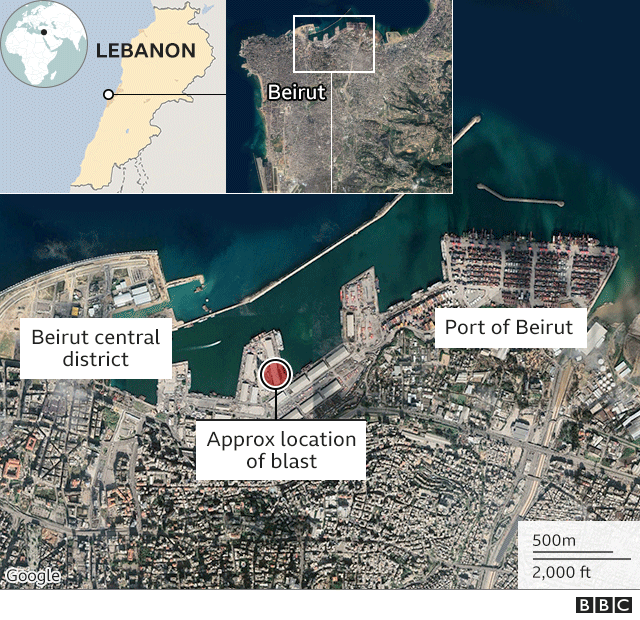
Rescue workers in Lebanon are searching for more than a hundred people who are missing after a huge explosion devastated the port area of the capital Beirut on Tuesday.
The blast killed at least 100 people and injured more than 4,000 others.
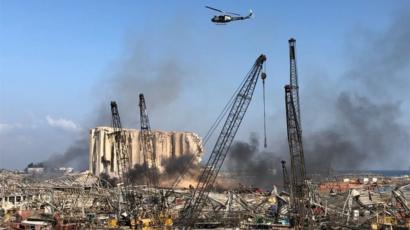
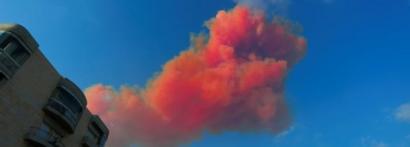
The whole city was shaken by the explosion and a mushroom cloud could be seen spreading over the port area.
President Michel Aoun said the blast was caused by 2,750 tonnes of ammonium nitrate stored unsafely in a warehouse.
Ammonium nitrate is used as a fertiliser in agriculture and as an explosive.
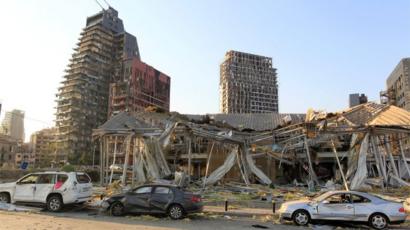
Image copyrightREUTERSImage captionBuildings were left gutted by the blastImage copyrightREUTERSImage captionThe destruction is widespread
He scheduled an urgent cabinet meeting for Wednesday, and said a two-week state of emergency should be declared.
The country will observe an official period of mourning for three days from Wednesday.
What happened?
The explosion occurred just after 18:00 (15:00 GMT) on Tuesday after a fire at the port.
Eyewitness Hadi Nasrallah says that he saw the fire but did not expect the blast. "I lost my hearing for a few seconds, I knew something was wrong, and then suddenly the glass just shattered all over the car, the cars around us, the shops, the stores, the buildings. Just glass going down from all over the building." he told the BBC.
The BBC's Lina Sinjab said she could feel the wave of the explosion from where she was, a five-minute drive from the port area . "My building was shaking, it was about to fall, all windows were forced open," she said.
The blast was also felt 240km (150 miles) away on the island of Cyprus, in the eastern Mediterranean, with people there saying they thought it was an earthquake.
BBC journalist Rami Ruhayem said there was chaos in the aftermath of the blast as ambulances with their sirens wailing inched their way through heavy traffic to get to the site. "Shards of glass blanketed the highway leading into Beirut from the north, as a tractor cleared the rubble."
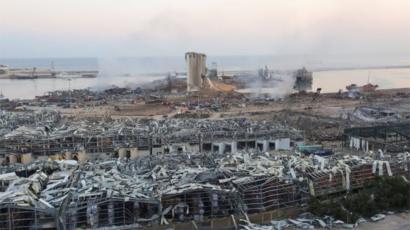
Image copyrightREUTERSImage captionThe port area was largely flattened
Local media showed people trapped beneath rubble and video footage showed wrecked cars and blast-damaged buildings. Hospitals were said to be overwhelmed.
The head of Lebanon's Red Cross, George Kettani, described it as a "huge catastrophe", adding: "There are victims and casualties everywhere."
His organisation said more than 100 people had died and that a search and rescue operations was still under way to locate the more than 100 people missing.
Journalist Sunniva Rose said there was still smoke going up into the sky late into the evening. "The whole city was black. It was very hard to walk around, people were covered in blood. I saw an 86-year-old woman being treated by a doctor who had just run out of his home with a first aid kit."
What triggered it?
Officials said that an investigation was under way to find the exact trigger which caused the ammonium nitrate - which had reportedly been stored in a warehouse after it was unloaded from a ship impounded at the port in 2013 - to explode.
Ammonium nitrate
Image copyrightREUTERS
Common industrial chemical used mainly as fertiliser in agriculture
Also one of the main components in explosives used in mining
Not explosive on its own, ignites only under the right circumstances
When it explodes, it can release toxic gases including nitrogen oxides and ammonia gas
Strict rules on how to store it safely: site has to be fire-proofed, and not have any drains, pipes or other channels in which ammonium nitrate could build up
British former intelligence officer Philip Ingram told the BBC's Today programme that ammonium nitrate could only be turned into an explosive substance under certain circumstances.
Mr Ingram said that safely stored it was relatively safe but that in confined space and when contaminated with items such as fuel oil it could cause an explosion.
Lebanon's Supreme Defence Council said those found responsible for the explosion would face the "maximum punishment" possible.
What's the background?
The explosion comes at a sensitive time for Lebanon. With Covid-19 infections on the rise, hospitals were already struggling to cope. Now, they are faced with treating thousands of injured people.
The country is also going through an economic crisis. Lebanon imports most of its food and large quantities of grain stored in the port have been destroyed causing fears of widespread food insecurity to come.
The future of the port itself is in doubt due to the destruction caused and with many building and homes reduced to an uninhabitable mess of glass and debris many residents have been left homeless.
President Aoun announced that the government would release 100 billion lira (£50.5m; $66m) of emergency funds but the impact of the blast on the economy is expected to be long-lasting.
The blast happened close to the scene of a huge car bombing which killed former Prime Minister Rafik Hariri in 2005. A verdict is due in the trial of four men accused of orchestrating the attack on Mr Hariri at a special court in the Netherlands.
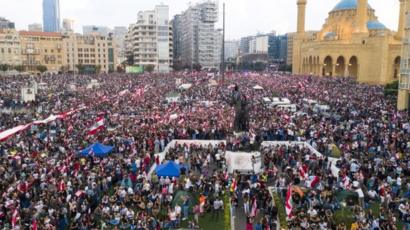
Even before the blast, tensions were high in Lebanon, with street demonstrations against the government's handling of the worst economic crisis since the 1975-1990 civil war.
Image copyrightEPAImage captionProtesters vented their anger during demonstrations such as this one in October 2019
Many blame the ruling elite who have dominated politics for years and amassed their own wealth while failing to carry out the sweeping reforms necessary to solve the country's problems. People have to deal with daily power cuts, a lack of safe drinking water and limited public healthcare.
There has also been tension on the border with Israel, which said last week that it had thwarted an attempt to infiltrate Israeli territory by Hezbollah, a militant Shia Islamist organisation that wields considerable power in Lebanon.
But a senior Israeli official has told the BBC that "Israel has no connection" to the Beirut blast.
Hurricane Isaias has blasted ashore in North Carolina, battering coastal areas with heavy rains and winds of up to 85mph (140km/h).
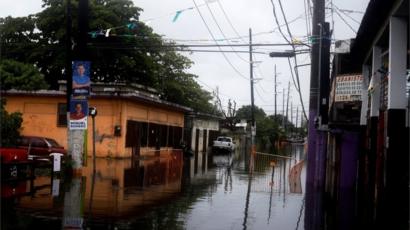
It made landfall near the border with South Carolina at 23:10 EDT (03:10 GMT Tuesday), causing flooding and leaving thousands of homes without power.
The National Hurricane Center (NHC) warned of "the danger of life-threatening storm surge".
The storm is now headed towards Virginia, New Jersey and New York.
Isaias - the ninth named storm of the year - was downgraded to a tropical storm after hitting islands in the Caribbean last week, but was recategorised as a category-one hurricane as it approached the Carolinas on Monday.
The NHC says it is now moving quickly up the eastern seaboard.
North Carolina Governor Roy Cooper, who on Friday declared a state of emergency, urged residents to be on the alert.
"North Carolinians have had to dig deep in recent months to tap into our strength and resilience during the pandemic," he said on Monday.
"But with this storm on the way, we have to dig a little deeper. Let's keep each other safe from the wind and water as well as from the virus."
Mr Cooper said the state was equipped to open storm shelters where people could socially distance.
Isaias was later downgraded to a tropical storm. However, further north, New York City is preparing for storm surges.
State officials in regions preparing for hurricanes this season have also been grappling with opening shelters that comply with social distancing regulations.
Image copyrightEPAImage captionMany are without power in Puerto Rico after Isaias
Over the weekend the storm churned past Florida.
In the Dominican Republican and Puerto Rico, Isaias killed at least two people. It uprooted trees, destroyed crops and homes and caused flooding and landslides.
Facing a natural disaster in a pandemic
US disaster agencies have updated preparedness and evacuation guidance in light of Covid-19.
The Centers for Disease Control recommends families add Covid-19 items to a disaster "go kit" that can be taken in an emergency situation:
Hand sanitiser
Soap (liquid or bar)
Disinfectant wipes
At least two face coverings per person (though masks should not be worn by those under two years old or those who are unconscious)
Here are some key guidelines for protecting yourself against Covid-19 if you must evacuate to a shelter:
Wash your hands often
Keep 6ft of distance from anyone not among your household
If possible, wear a face covering and wash it regularly
Avoid sharing food and drinks
Frequently disinfect your area in the shelter (including toys and electronics)







Live Reporting
'Once a Red, always a Red'
Angel Gomes has posted an emotional message on Instagram as he prepares to leave Manchester United.
The 19-year-old, who first started training with the United academy at the age of six, is joining French side Lille before moving to Portuguese club Boavista on loan.
Social embed from instagram